

I. Introduction
Laser cutting technology has revolutionized the manufacturing industry by providing a highly precise and efficient method for cutting various materials. Utilizing a focused laser beam, this technology can cut, engrave, and shape materials with remarkable accuracy, making it a staple in industries ranging from automotive to electronics.
However, like any manufacturing process, laser cutting has its limitations. Understanding these constraints is crucial for manufacturers to optimize their operations and select the appropriate technology for their specific needs.
This article mainly discusses the key limitations of laser cutting machines, covering material constraints, technical and operational challenges, safety and environmental concerns, specific application issues, and alternative cutting technologies.
II. Material Limitations
Types of Materials
Laser cutting demonstrates remarkable versatility across a wide spectrum of materials, including ferrous metals like mild steel and stainless steel, non-ferrous metals such as aluminum alloys, and various polymers like acrylic (PMMA) and polycarbonate.
However, certain materials present significant challenges. Highly reflective metals, particularly copper and some aluminum grades (e.g., 6061-T6 with polished surfaces), can pose safety risks and reduce cutting efficiency by reflecting the laser beam.
This phenomenon necessitates specialized high-power fiber lasers or surface treatments to enhance absorption. Transparent materials, such as certain glasses and clear plastics, also prove problematic due to their low absorption coefficients, often requiring specific wavelengths or pulsed laser systems for effective processing.
Material Thickness
The thickness capacity of laser cutting systems represents a critical limitation, with practical constraints typically ranging from 0.1mm to 25mm for metals, depending on the laser type and power.
CO2 lasers excel in cutting thicker non-metallic materials (up to 50mm in some acrylics), while fiber lasers dominate in metal cutting, especially for thicknesses up to 20mm in mild steel.
Beyond these thresholds, cut quality deteriorates rapidly, manifesting as increased kerf width, taper, and dross formation. For materials exceeding optimal laser cutting ranges, alternative technologies like waterjet cutting or plasma cutting often prove more effective, especially for thicknesses beyond 25mm in metals.
Material Waste
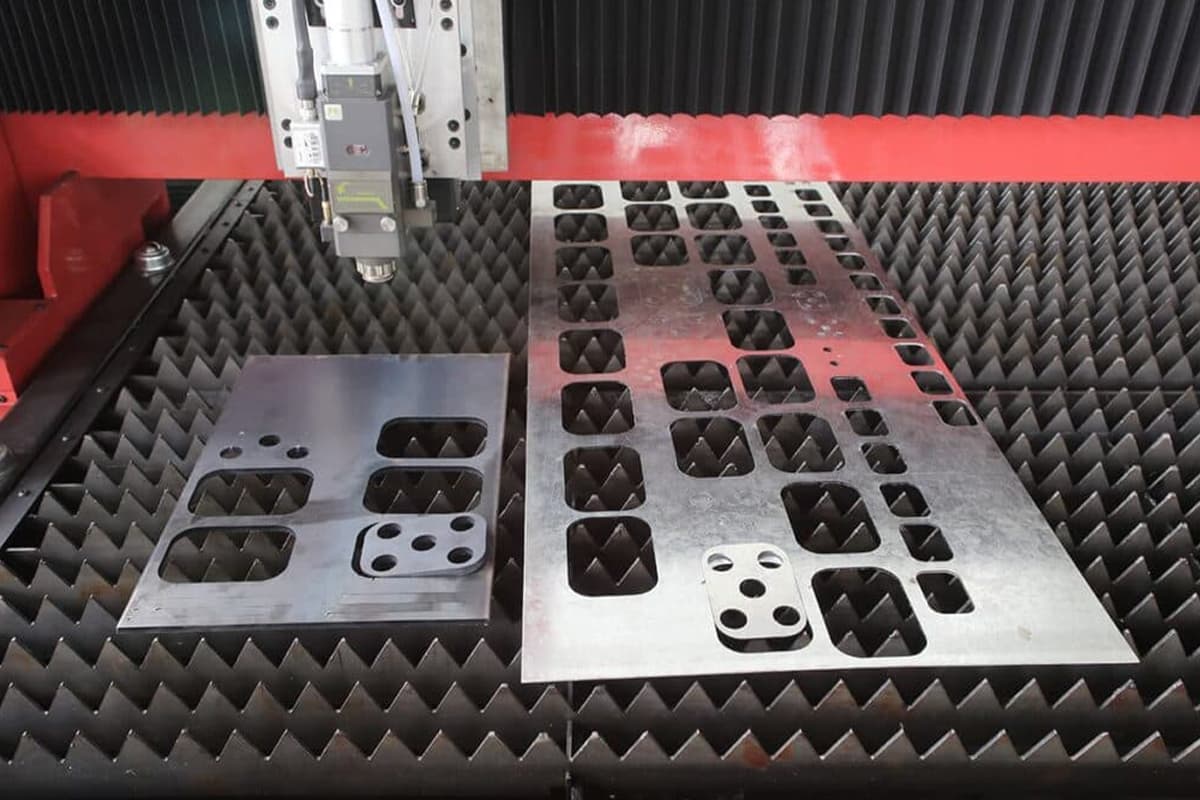
Kerf width, a crucial factor in material utilization efficiency, varies significantly in laser cutting. Typical kerf widths range from 0.1mm to 1mm, contingent upon material properties, laser type, and cutting parameters.
High-power fiber lasers can achieve narrower kerfs (0.1-0.3mm) in thin metals, while CO2 lasers may produce wider kerfs (0.2-0.5mm) in thicker materials. This variance directly impacts material yield, particularly critical when processing high-value materials like titanium alloys or exotic steels.
Advanced nesting software and optimized cutting strategies, such as common-line cutting, can significantly reduce waste, often achieving material utilization rates of 80-90% in complex parts. Additionally, the heat-affected zone (HAZ) adjacent to the cut edge must be considered, as it can affect material properties and subsequent processing steps.
III. Technical and Operational Constraints
Precision and Calibration
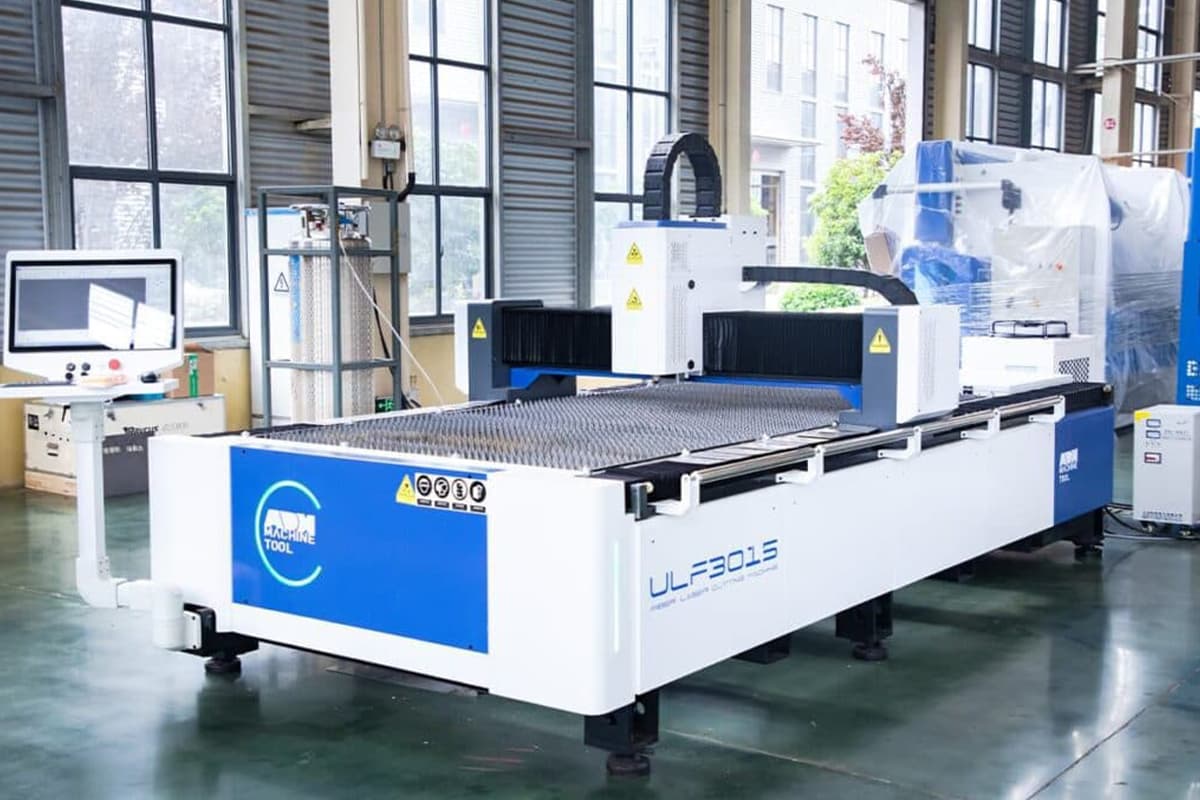
While laser cutting offers exceptional precision, maintaining this accuracy presents ongoing challenges. Modern laser cutters can achieve tolerances as tight as ±0.1 mm, but this level of precision requires meticulous calibration and environmental control. Factors such as thermal expansion, beam delivery system alignment, and focal point stability all impact cut quality.
Advanced systems employ real-time adaptive optics and closed-loop feedback mechanisms to maintain precision during operation. For instance, capacitive height sensing technology can dynamically adjust the focal point, compensating for material irregularities.
Environmental control is equally critical; temperature variations of just 1°C can cause measurable deviations in large parts. To address this, some facilities implement climate-controlled enclosures or thermal compensation algorithms.
Regular calibration using laser interferometry techniques ensures long-term accuracy, with many modern systems featuring automated calibration routines to minimize downtime and operator dependency.
IV. Safety and Environmental Concerns
Safety Issues
Operating laser cutting machines involves critical safety risks that demand meticulous management. High-power lasers can inflict severe injuries, including third-degree burns and permanent eye damage, if stringent safety protocols are not rigorously enforced. The laser's intense focal point, often exceeding 2000°C, can rapidly ignite flammable materials, presenting significant fire hazards. To mitigate these risks, comprehensive safety measures are imperative: